
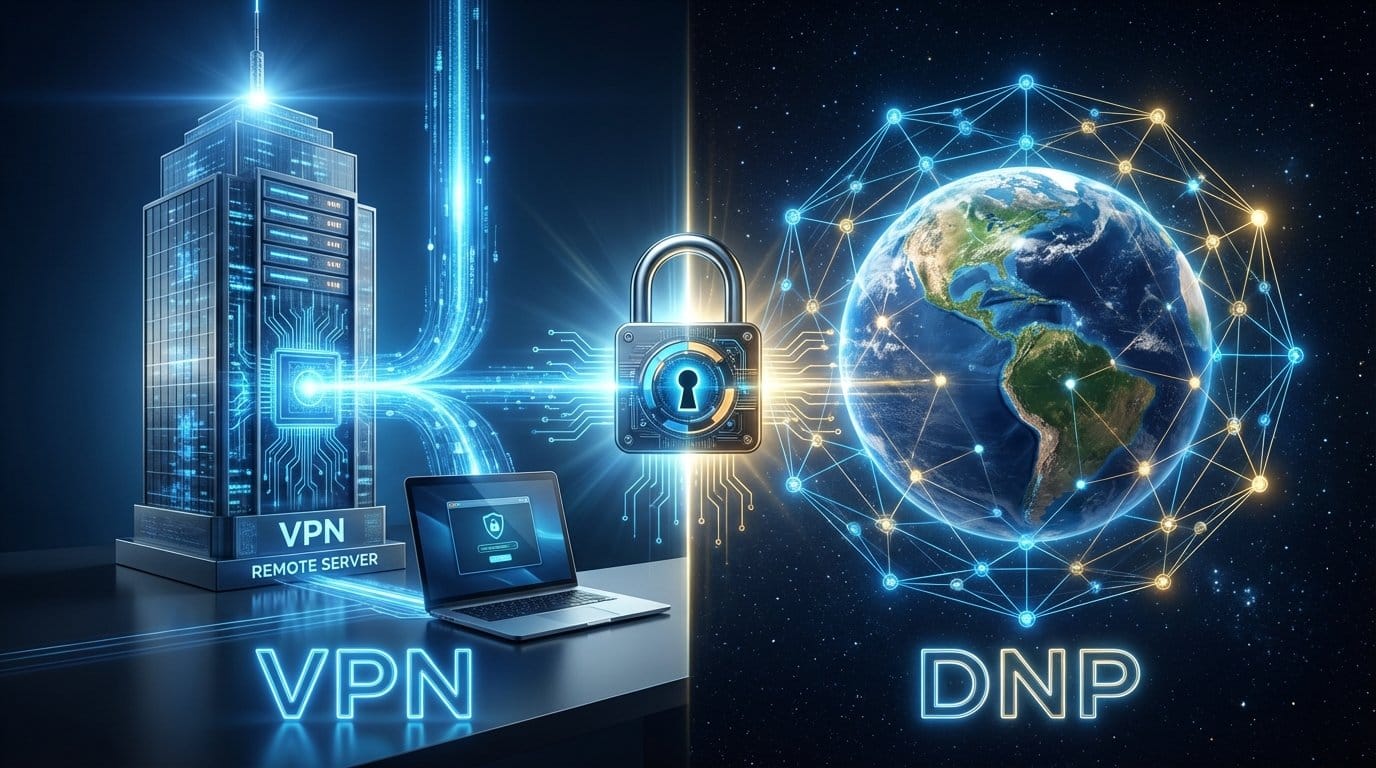
In a world where online security is essential, distinguishing between VPN and DPN technologies is crucial for any security-conscious consultant. Let’s explore the key differences between these two tools to enhance privacy and IP security.
What is a VPN?
A VPN (Virtual Private Network) is a service that connects you to the internet through a remote server. It encrypts your internet traffic and masks your real IP address, providing a layer of security and anonymity. VPNs are popular for securing public Wi-Fi connections and bypassing geo-restrictions.
VPN Advantages:
Data Protection: Encrypts information, ensuring confidentiality.
Anonymity: Your real IP address is masked, protecting your identity.
Access to Content: Allows you to bypass geographical restrictions.
Example: When you use a Wi-Fi café to connect to your bank, a VPN protects your sensitive data from potential interception.
What is a DPN?
A Decentralized Private Network (DPN) is a more recent innovation that shares similarities with VPNs but operates in a distributed manner. Unlike centralized VPNs, DPNs rely on a network of nodes operated by multiple providers, thus offering increased resilience and security.
Advantages of DPNs:
Decentralization: Reduces dependence on a single provider, limiting points of failure.
Resilience: Difficult to block due to its distributed structure.
Privacy: Offers greater privacy through data distribution.
Scenario: Imagine a network where no government can force a single provider to disclose data because it is distributed across thousands of nodes.
VPN vs. DPN Comparison
VPN vs. DPN Characteristics
Structure: Centralized vs. Decentralized
Security: Strong encryption, Resilience and privacy
Performance: Varies depending on the server, Can be slower but flexible
Accessibility: Widely available, Increasingly adopted
Choosing Between VPN and DPN
For a security-conscious consultant, the choice depends on specific needs:
If you prioritize fast access and proven options, a VPN is suitable.
For those seeking enhanced security through decentralization, a DPN is ideal.
Conclusion and Call to Action
As online threats evolve, understanding and using VPN and DPN technologies can transform how you interact with the digital world. Interested in strengthening your IP security? Try a VPN service today or explore innovative DPN options to discover the one that best suits your needs.
Meta Title: Understanding VPNs and DPNs: Online IP Security
Meta Description: Explore the key differences between VPNs and DPNs to strengthen your IP security. Discover which tool is right for your specific online needs.
URL Slug: difference-vpn-dpn-ip-security
Keyword Suggestions:
online privacy
data security
decentralized networking
Visual Recommendation:
A comparative diagram illustrating the centralized and decentralized structures of VPNs and DPNs.
An infographic on data distribution in a DPN network.
Links:
Internal: Article on cybersecurity best practices on your website.
External: Link to a detailed guide on online security, for example, the CNIL guide.
With this understanding, take action to secure your data according to your specific needs.