
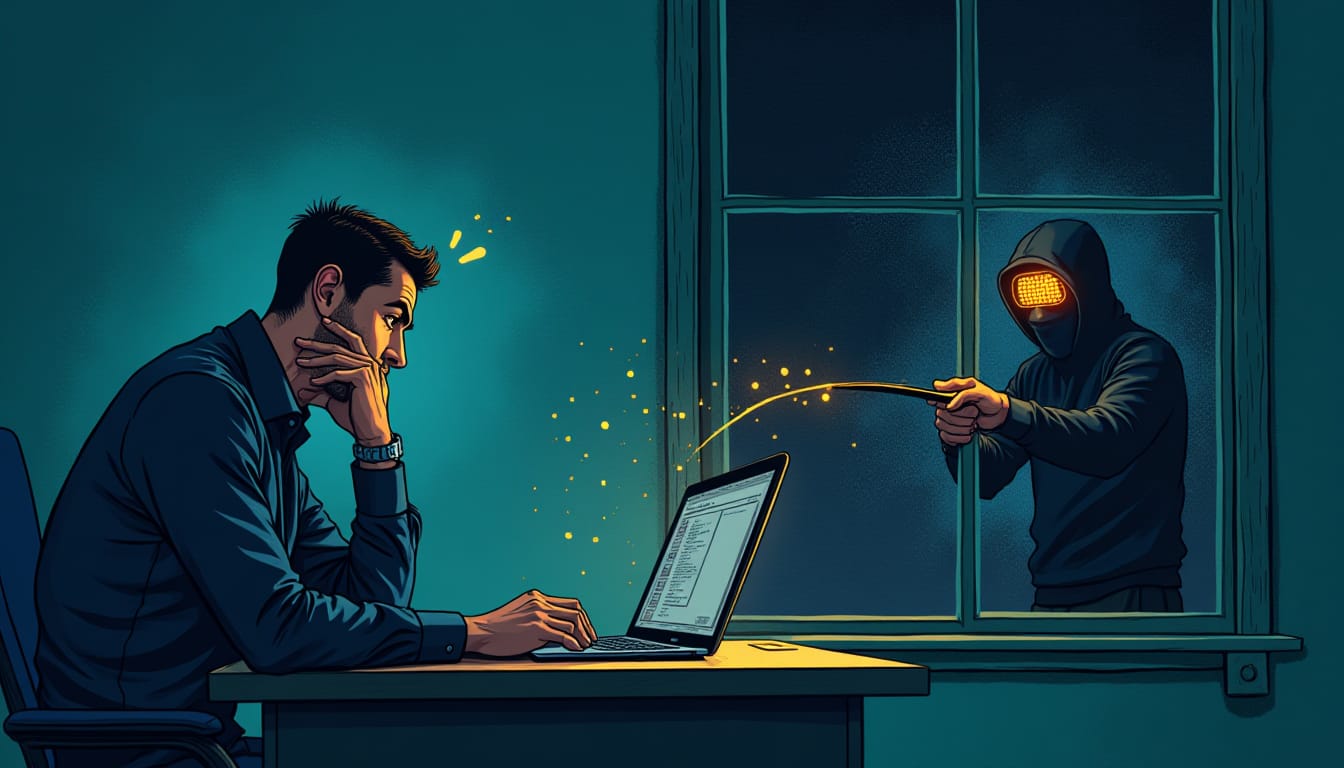
Here’s the story of a man who received a peculiar package: This morning, I received the most sophisticated phishing attempt of my digital life. A seemingly innocuous text message, a short link, and, most importantly, an AI-generated image of a delivery person holding a Mondial Relay package with my name and address printed on it.
In the blink of an eye, everything is thrown into disarray. It’s no longer just spam, but a psychological attack designed to break down people’s defenses.
At Security Forge, we are already seeing this type of scenario become widespread. This is a strong warning sign for all IT security professionals, as well as for individuals, gamers, remote workers, students, and entrepreneurs.
Why is this phishing scam so dangerous for online security?
This text message contained several troubling elements:
- Actual data: name, address, delivery details
- Custom AI image designed to create the illusion of evidence
- Urgent: Your package is on hold. Click to release it.
We’re no longer dealing with poorly translated emails. We’re facing a near-industrial-scale cybercrime operation, fueled by generative AI and a massive data breach.
Possible consequences:
- Credential theft: email, streaming, gaming, and social media accounts
- Cyberattacks: Spread to Your Work Devices, Unsafe Remote Work
- Ransomware via the download of a fake package tracking app
- Serious breach of data protection and privacy
Analyzing the attack is an exercise in digital literacy: for cybersecurity experts and tech influencers alike, this case is ideal for raising security awareness.
Here are the steps involved in the attack:
- Collection or purchase of databases containing mailing addresses, phone numbers, and full names.
- Generation of realistic AI images (delivery person, badge, logo, package).
- Mass sending of targeted text messages containing a malicious URL.
- A phishing page designed to look like a delivery portal or a secure payment site.
This is a guide to phishing prevention from the other side. Understanding how it works is already a step toward preventing hacking.
Here’s how Security Forge recommends dealing with these threats:
- Be on the lookout for urgent messages
- Verify the authenticity of the senders
- Use advanced security tools to detect malicious content
- Stay up to date on new threats
Now, the future of our online security depends on our collective ability to anticipate and respond to such threats.